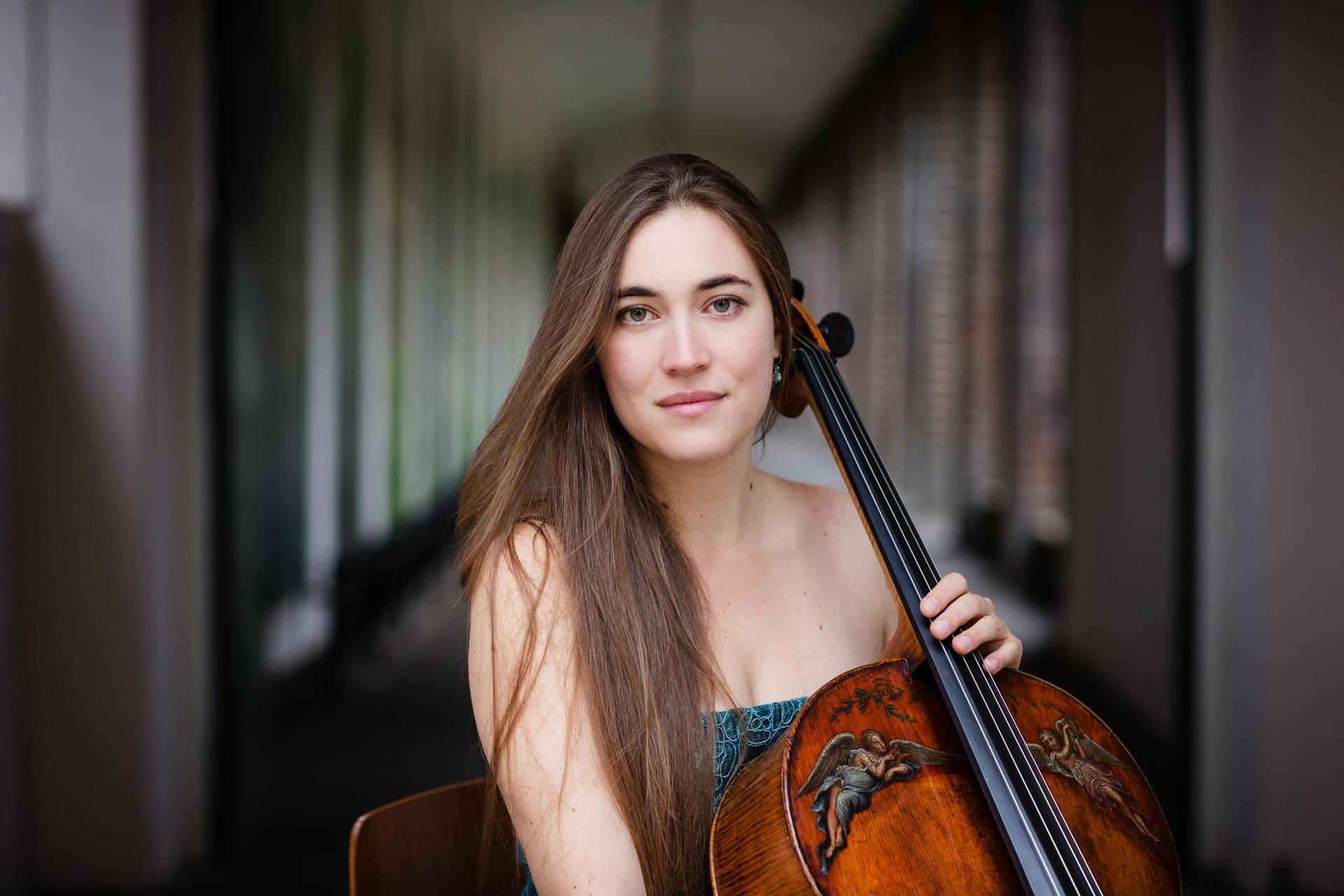
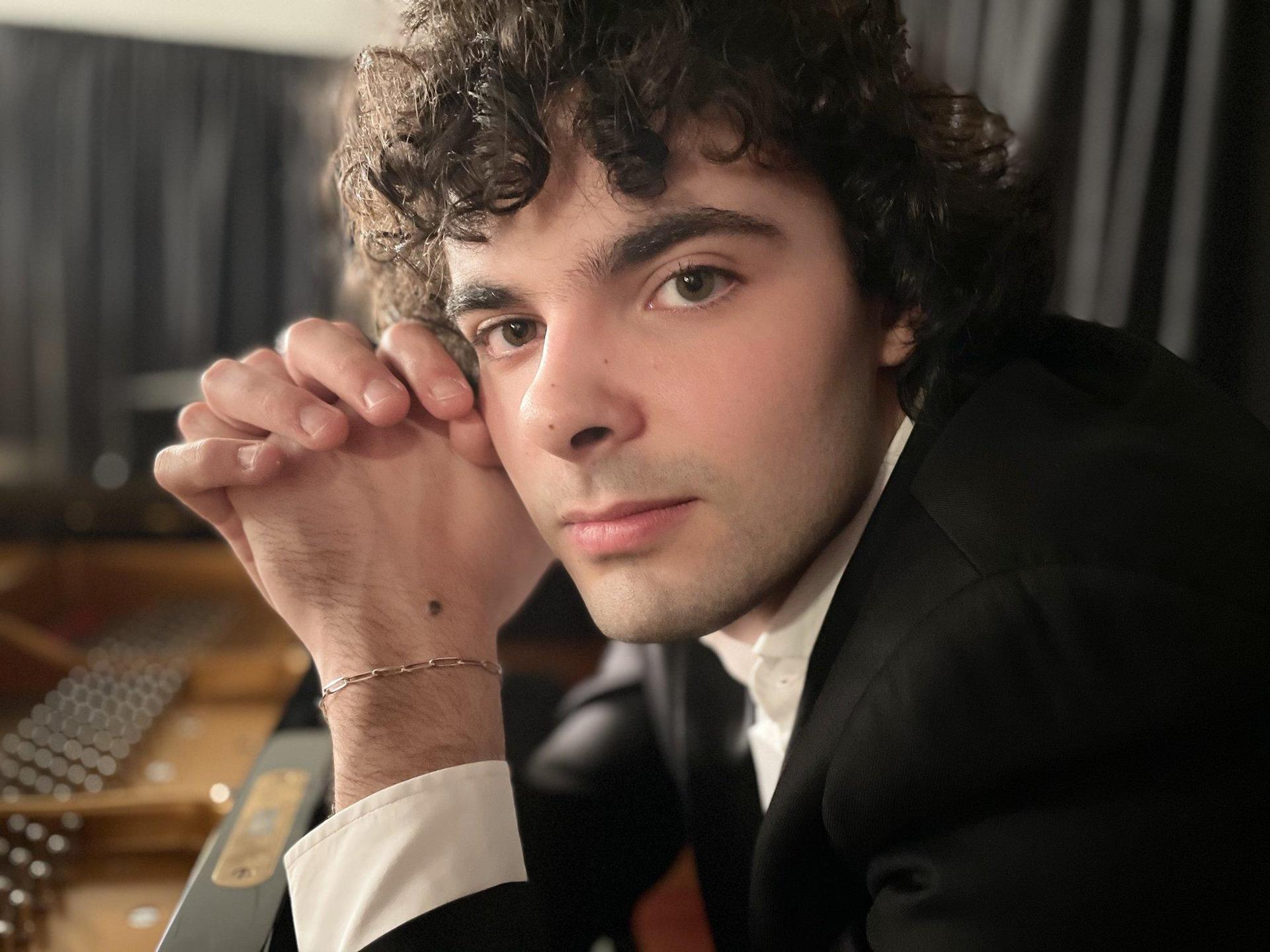
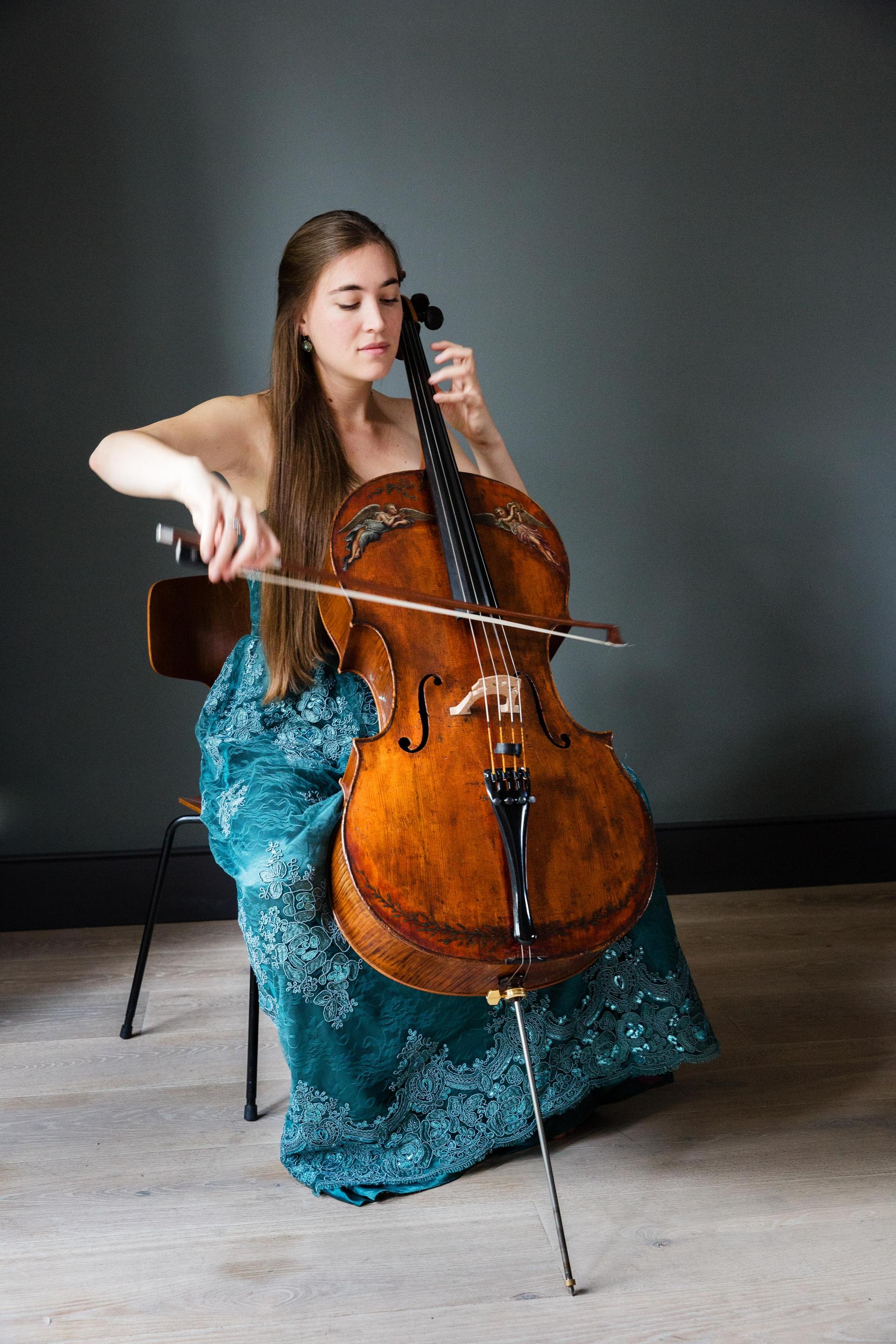
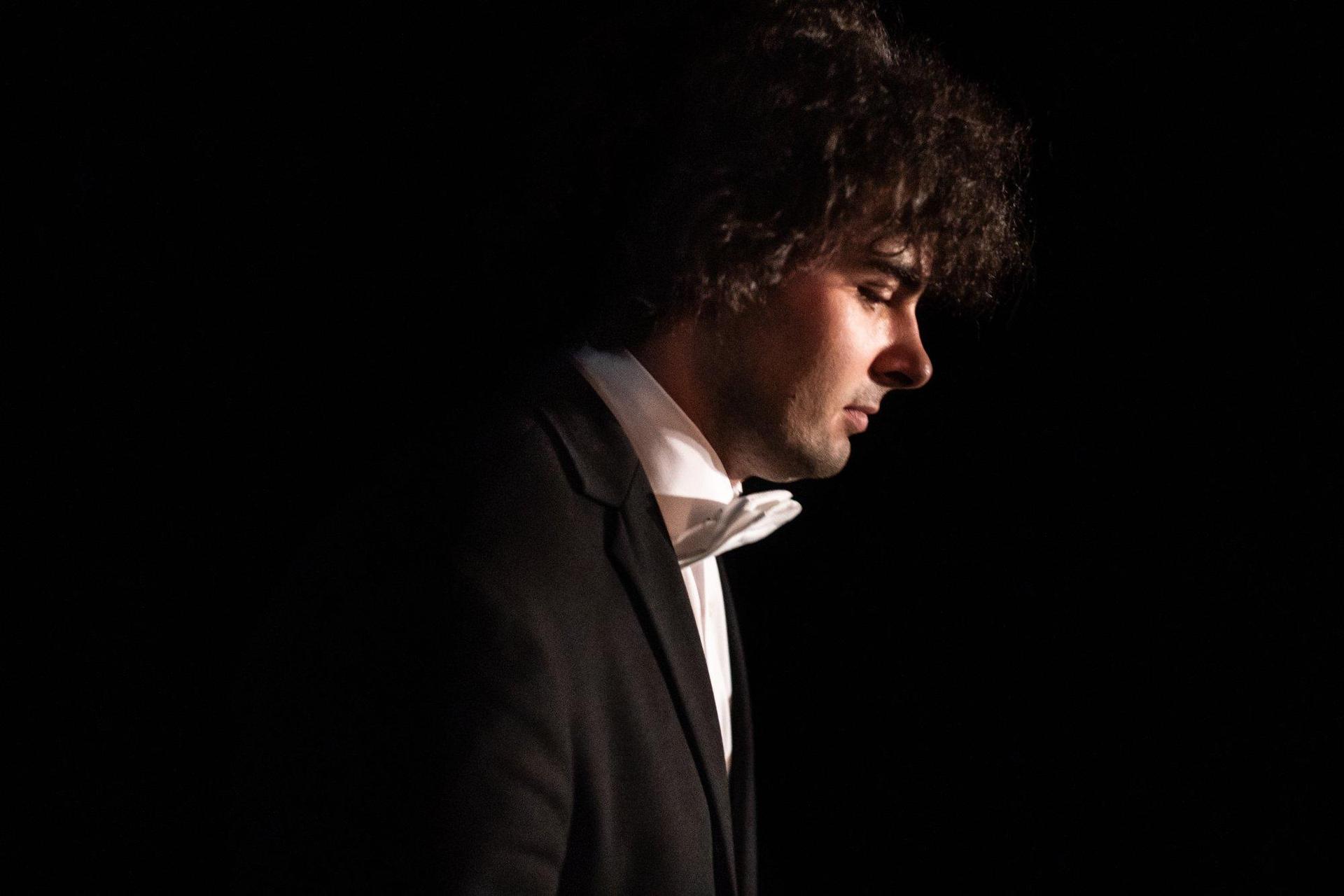
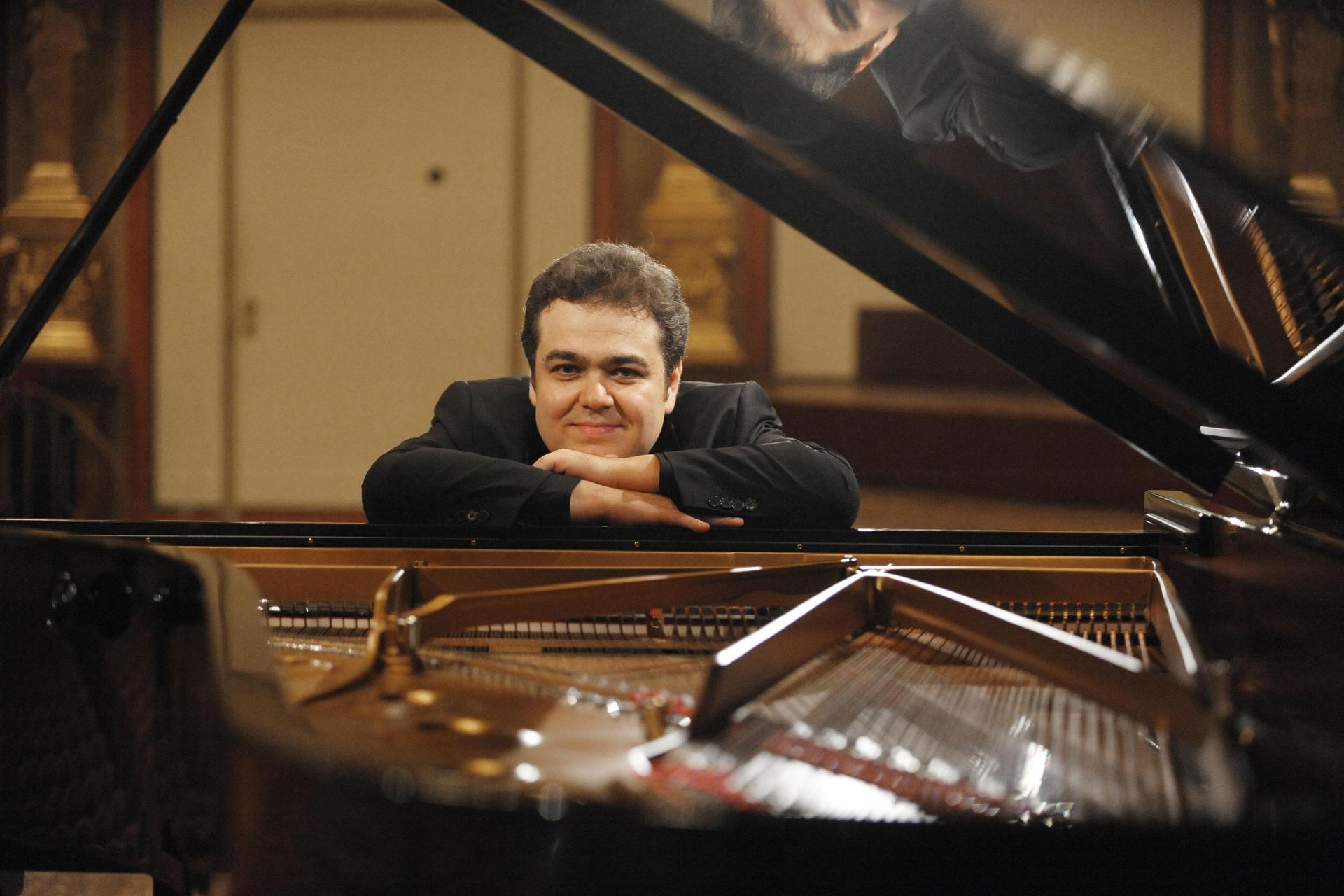
In this concert chamber music from the nineteenth and twentieth centuries from Germany, Spain and France comes to life. Beginning with Johannes Brahms, who devoted his entire life to chamber music. From the Piano Trio opus 8 from 1854, the year his friend Robert Schumann jumped into the Rhine near Düsseldorf, to the Two Clarinet Sonatas opus 120 from 1895, written two years before his death. Brahms composed his chamber music with apparent ease, without the struggles he faced with his orchestral music, such as in his First Symphony and First Piano Concerto. Like Felix Mendelssohn, Brahms wrote two cello sonatas with a twenty-year gap between them, in 1865 and 1886. Due to a crowded concert schedule, Brahms sought peace during the summer months in the beautiful Swiss countryside. In the summer of 1886 he stayed in the small village of Hofstetten, near Thun. There the Violin Sonata opus 100 emerged, the Piano Trio opus 101 and the Second Cello Sonata opus 99 performed here.
The Second Cello Sonata is a passionate work that alternates between drama and exuberance. The sonata gets straight to the point. In the heroic first movement, the cello is almost overwhelmed by the turbulent and almost orchestral piano part. The beautiful Adagio affettuoso opens with solemnly plucked cello tones and takes a wide path. Could those high-strung cello lines perhaps be descended from Beethoven? A dark evening atmosphere pervades the ghostly Scherzo. The oppressive chromaticism recalls the Finale of the Third Symphony. The final movement seems like an eruption of wild folk music from the countryside in the way only Brahms knew how to pour it into his scores.
The elegies of Franz Liszt Next, one of the most important and fascinating late works of Franz Liszt, La lugubre gondola, a depiction of a funeral gondola in the canals of Venice. Liszt wrote the original piano version around the time he was staying with Wagner at Palazzo Vendramin on the Canal Grande in Venice in late 1882. Did Liszt have a premonition of Wagner's death shortly after, on February 13, 1883? The long funeral procession to Bayreuth began with the sorrowful gondola journey to Santa Lucia train station in Venice. Die Zelle in Nonnenwerth initially came to paper as a mournful lament of a singer who withdraws from the world in the convent of Nonnenwerth and laments his loneliness there. That singer may well have been Liszt himself, who felt drawn to monastic life, and spent several summers on the island of Nonnenwerth with his former family. It is hardly surprising that over forty years he wrote so many versions, including one for violin or cello and piano. Spanish Songs Without Words Like many of his contemporaries, the Spanish composer Manuel de Falla had a keen interest in the musical heritage of his country, as Béla Bartók and Zoltán Kodály did for Hungary and Edvard Grieg for Norway.
De Falla had a special interest in the flamenco of his native region Andalusia and more specifically the canto jondo. Echoes of this resound through virtually his entire oeuvre. From 1907 to 1914 Falla lived in Paris, where he had contact with Maurice Ravel, Claude Debussy and Paul Dukas. Shortly before the impending First World War forced Falla to return to Madrid, he wrote the song cycle 'Siete canciones populares españolas' (Seven Spanish Folk Songs) in Paris, based on authentic Spanish folk songs, lightly touched up by him and provided with piano accompaniment. He later reworked six of the seven songs into a version for violin and piano. Thus they pass by without words: a song about a Moorish cloth (El paño moruno), an Eastern-tinged lullaby from Andalusia (Nana), a lively song in which a betrayed lover buries his resentment (Canción), a wild song from Andalusia with exclamations about the ups and downs of love (Polo), a lament in which a willow weeps with a sorrowful beloved (Asturiana) and finally a tale of a secret love from the Aragon region (Jota).
Debussy's Swan Song The last years of Claude Debussy's life were overshadowed by the First World War and extremely painful cancer, which would ultimately claim him in 1918. In 1915 he began a project of six sonatas for various instrumentations and dedicated to his second wife, Emma-Claude. He only managed to complete the first three sonatas, with the Violin Sonata (1917) being the last and most difficult.
It is Debussy's swan song in the field of chamber music. Debussy, already dying and under morphine, wrote about the creative process: 'I work in a void, exhausting myself in small tinkering jobs, which only make me more desperate. Never have I felt so worn down by this pursuit of the unattainable.' In May 1917 Debussy performed his last work himself in the Salle Gaveau in Paris with violinist Gaston Poulet: 'They wanted to repeat the Intermède, which I firmly opposed, in order to respect the unity of the composition; so we had to play the entire sonata again.' After this sonata Debussy completed only one more work, the transcription for cello and piano of the sonatas for viola da gamba and harpsichord by Johann Sebastian Bach. With this homage to Bach, Claude Debussy, musicien français, passed into eternity.